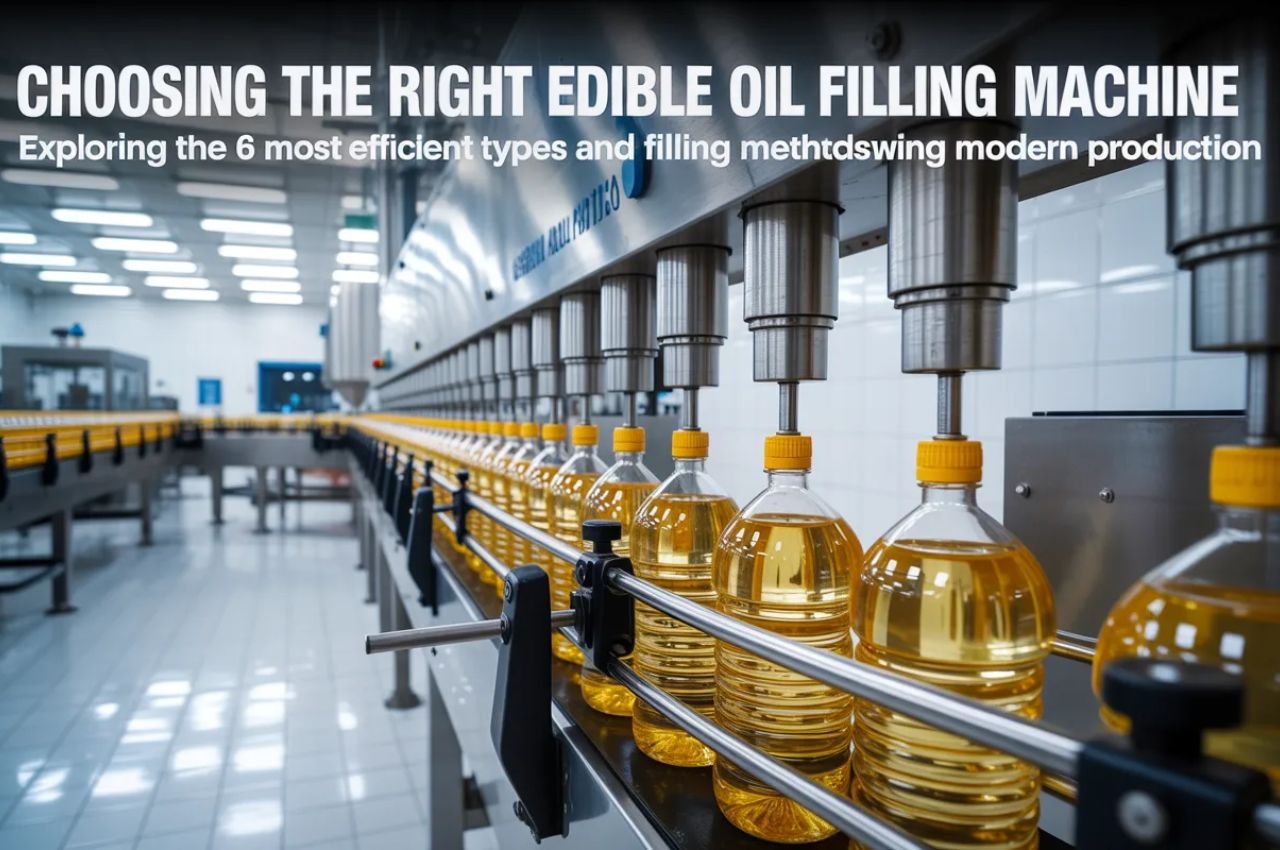
Edible oil is one of the most widely used food products in the world. From small kitchen bottles to large containers supplied to restaurants, hotels, and food factories, oil must pass through one final step before reaching the market—filling and packaging.
At first glance, filling may seem like a simple task. But anyone who has worked in an oil plant knows that accurate, clean, and efficient filling is one of the most critical stages in the entire production line. Even small mistakes at this point can lead to waste, quality issues, and customer complaints.
This is why modern oil producers rely on specialized filling machines designed specifically for liquid and viscous products like edible oil.
Contents
- 1 Why the Right Filling Machine Matters
- 2 Key Factors When Selecting a Filling Machine
- 3 Understanding the Main Filling Methods
- 4 The 6 Most Efficient Edible Oil Filling Machine Types
- 5 Manual, Semi-Automatic, and Fully Automatic Systems
- 6 How Automation Improves Accuracy and Reduces Waste
- 7 Scalability and Long-Term Business Growth
- 8 Hygiene and Safety Considerations
- 9 The Manufacturer Behind the Technology: GQ-Agri
- 10 Final Thoughts
Why the Right Filling Machine Matters
Edible oil behaves differently from water or soft drinks. It is slippery, sometimes thick, and highly sensitive to contamination. Without proper equipment, producers often face:
- Spillage and product loss
- Inaccurate bottle volumes
- Hygiene and contamination risks
- Slow and inconsistent production
A professional filling system solves these problems by ensuring precise volume control, clean operation, and stable output. That is why it is essential to Choose an Edible Oil Filling Machine that matches your oil type, packaging format, and production goals.
Key Factors When Selecting a Filling Machine
Before choosing a system, producers should look at real production conditions, not just machine speed. Important factors include:
- Oil viscosity – thin or thick oils behave differently
- Bottle size and material – plastic, glass, small or large
- Daily production volume
- Level of automation needed
- Cleaning and hygiene requirements
When these factors are clearly defined, selecting the right filling technology becomes much easier.
Understanding the Main Filling Methods
Different machines use different filling principles. Each method is designed to handle specific product characteristics and production demands.
Common filling methods include:
- Gravity filling – Uses natural flow, best for low-viscosity oils
- Piston filling – Delivers high accuracy for thicker oils
- Pump filling – Flexible and precise for multiple oil types
- Overflow filling – Creates uniform fill levels in transparent bottles
- Vacuum filling – Reduces air bubbles and foaming
- Pressure filling – Designed for high-speed automated lines
Each method plays a role in modern oil packaging.
The 6 Most Efficient Edible Oil Filling Machine Types
To better understand your options, it helps to explore the 6 Mainstream Edible Oil Filling Machine Types and Their Filling Methods.
Here is a simple overview:
1. Gravity Filling Machine
Ideal for thin, free-flowing oils. Uses gravity to fill containers.
2. Piston Filling Machine
Best for thicker oils. A piston draws and dispenses exact volumes.
3. Pump Filling Machine
Uses pumps for controlled, flexible filling across different oil types.
4. Overflow Filling Machine
Ensures uniform liquid levels, especially for transparent bottles.
5. Vacuum Filling Machine
Minimizes foaming and air bubbles during filling.
6. Pressure Filling Machine
Used in high-speed automated lines for large-scale factories.
Manual, Semi-Automatic, and Fully Automatic Systems
- Manual machines suit small workshops and startups.
- Semi-automatic machines balance speed and cost.
- Fully automatic lines offer high efficiency for industrial plants.
Choosing the right automation level depends on production size and growth plans.
How Automation Improves Accuracy and Reduces Waste
In edible oil production, even small filling errors can lead to major losses over time. Modern machines solve this through automation and digital control.
Advanced systems use sensors, PLC controls, and programmable volume settings to ensure each bottle receives the exact amount of oil. This prevents overfilling, underfilling, and compliance issues.
Automation also boosts speed and consistency. While manual filling handles small batches, automated systems can fill hundreds or thousands of bottles per hour—without increasing labor costs.
Scalability and Long-Term Business Growth
A filling machine is not just for today—it should support future growth.
Many systems are modular. Producers can start with a semi-automatic machine and later upgrade to a full line by adding conveyors, capping, labeling, and sealing units.
This protects the investment and allows businesses to expand without replacing their entire setup.
Hygiene and Safety Considerations
Food safety is non-negotiable. Modern machines include:
- Stainless steel contact parts
- Drip-free nozzles
- Easy-to-clean designs
These features help meet food safety standards and protect consumers.
The Manufacturer Behind the Technology: GQ-Agri
Behind reliable filling solutions is a manufacturer that understands real processing challenges. GQ-Agri is a leading agricultural machinery manufacturer from China, trusted by producers worldwide.
They believe that small-scale farming should not mean small-scale profits. This philosophy drives their focus on affordable, durable, and easy-to-use machinery for small and medium-scale processors.
GQ-Agri designs complete edible oil production and filling solutions—from pressing and refining to bottling and packaging. Their machines combine efficiency, safety, and long-term reliability, helping entrepreneurs turn raw crops into higher-value products.
Final Thoughts
The right filling machine is essential for safe, efficient, and profitable oil production. By understanding filling methods and machine types, producers can make confident, informed decisions.
With smart technology and trusted manufacturers like GQ-Agri, modern edible oil production becomes faster, cleaner, and more profitable.