Contents
- 1 Introduction to Tissue Removal in Surgery
- 2 Understanding Surgical Tissue Removal Instruments
- 3 Scalpel – The Foundation of Tissue Removal
- 4 Surgical Scissors Used for Tissue Removal
- 5 Forceps Designed for Tissue Excision
- 6 Manufacturing Excellence by Peak Surgical
- 7 Applications in Dermatology and Gynecology
- 8 Rongeurs – Removing Bone and Dense Tissue
- 9 Electrosurgical Instruments for Tissue Removal
- 10 Importance of Instrument Quality in Tissue Removal
- 11 Sterilization and Maintenance of Tissue Removal Instruments
- 12 Choosing the Right Instrument for Tissue Removal
- 13 Global Demand for High-Quality Tissue Removal Instruments
- 14 Future Trends in Surgical Tissue Removal
- 15 Conclusion
- 16 FAQs
Introduction to Tissue Removal in Surgery
Surgery is about precision. It doesn’t matter if it’s taking out diseased tissue, removing the tumor, or taking samples for biopsy; the removal of tissue is one of the most important operations performed in the operating room. However, have you ever considered what instrument is employed to remove tissues? It’s not just one instrument. It’s a family of instruments with specialized functions, each specifically designed to serve a particular purpose.
From scalpels to curettes, surgeons rely on expertly designed instruments to make smooth cuts, reduce trauma and speed healing. This is where trusted brands such as Peak Surgical are able to help and provide reliable, high-performance tools used by medical professionals across the world.
Understanding Surgical Tissue Removal Instruments
The removal of tissues during surgery may require cutting, dissecting, scraping or excising. Each method requires a specific kind of tool.
Difference Between Cutting, Dissecting, and Excising
Cutting is the process of making an incision. Dissecting involves the separation of layers of tissue, while excising refers to removing tissue completely. Although these processes sound similar, the instruments used are specifically designed to meet the requirements of the task at hand.
Sharp vs Blunt Surgical Techniques
Sharp instruments such as scalpels or scissors are utilized for making precise incisions. At the same time, blunt instruments can reduce the risk of injury to tissue. Surgery is often combined within a single procedure.
Scalpel – The Foundation of Tissue Removal
When we think of surgical procedures, the scalpel is often the first tool that comes to mind. And it’s for a reason.
Structure and Design of a Surgical Scalpel
A scalpel has a handle and a detachable blade. The blade is razor sharp, permitting surgeons to cut away tissues with extreme precision.
Common Scalpel Blades Used for Tissue Excision
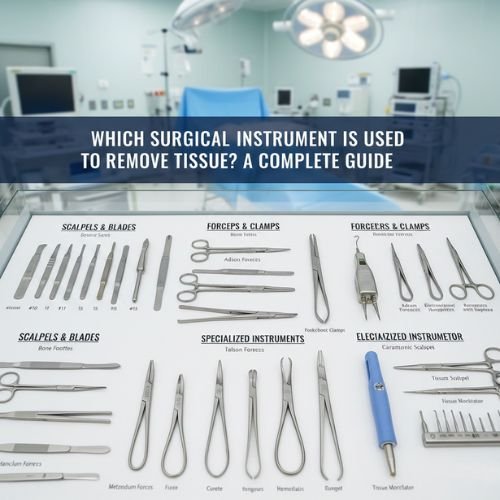
Blades like No. 10, 15, 11, and 10 are typically employed for the removal of soft tissue. Each blade type serves an individual purpose, ranging from big incisions to small cut-offs that are delicate.
Role of Peak Surgical in Manufacturing Precision Scalpels
Peak Surgical manufactures superior scalpels that are made from high-end stainless steel. Their blades are renowned for their precision, stability, and balance and make them a preferred choice for operating rooms around the world.
Surgical Scissors Used for Tissue Removal
Scissors aren’t only for cutting sutures. They also play an important part in the process of tissue excision.
Metzenbaum Scissors
Metzenbaum scissors are made to cut delicate tissue. Their handles are long, and their short blades give you great control.
Mayo Scissors
Mayo scissors are more heavy and are used to cut dense tissue such as fascia.
Why Peak Surgical Scissors Are Trusted Worldwide
Peak Surgical produces scissors with precise-ground blades as well as ergonomic handles that guarantee effortless cuts as well as less hand fatigue in surgeons.
Forceps Designed for Tissue Excision
Forceps can be used to grasp, hold and remove tissues.
Teeth with Tissue Forceps
The forceps come with tiny teeth, which provide a firm grip, making them perfect to hold tissue during removal.
Atraumatic Forceps for Delicate Tissue
Traumatic forceps reduce tissue damage and can be used to prevent the field of intestinal or vascular surgery.
Manufacturing Excellence by Peak Surgical
Peak Surgical forceps have been designed with meticulous care to detail, to ensure optimum control and alignment.
Curettes and Their Role in Tissue Removal
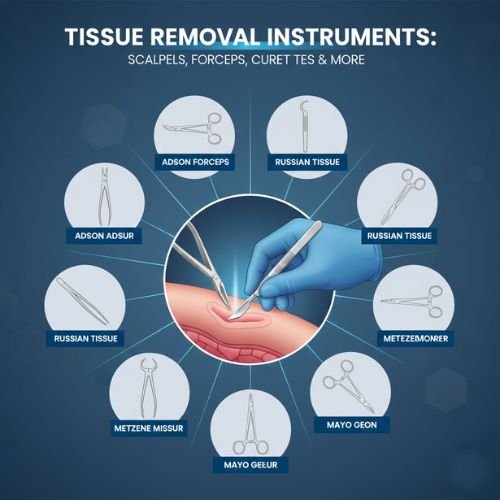
The use of curettes is to remove tissue from surfaces.
Sharp Curettes
Sharp curettes eliminate any diseased or unwanted tissue with ease.
Blunt Curettes
Blunt curettes are employed when only minimal damage to tissues is needed.
Applications in Dermatology and Gynecology
Curettes are often used for the removal of skin lesions, as well as in uterine procedure as well as in uterine surgeries, using Peak Surgical, offering a wide selection of sizes and shapes.
Surgical Punches for Tissue Sampling
Punch instruments are commonly utilized for biopsies.
Punch Biopsy Instruments
They are removed small, cylindrical pieces of tissue for testing purposes.
Precision Engineering by Peak Surgical
Peak Surgical Punch instruments give clear, consistent samples, which are essential for a correct diagnosis.
Rongeurs – Removing Bone and Dense Tissue
Rongeurs are high-powered instruments that are designed to remove bones and fibrous tissue.
How Rongeurs Work
They function as a solid pair of pliers that eat away tissue into tiny pieces.
Surgical Specialties Using Rongeurs
The neurosurgical, orthopedic and ENT procedures typically employ rongeurs developed from Peak Surgical.
Electrosurgical Instruments for Tissue Removal
Modern surgery typically uses energy-based instruments.
Monopolar and Bipolar Devices
The instruments make use of electricity in order to cut tissue and then coagulate it in a single step.
Advantages Over Traditional Instruments
Less bleeding and quicker procedures have made electrosurgical devices more popular.
Endoscopic Tissue Removal Instruments
The minimally invasive procedure relies on tools that are specialized.
Minimally Invasive Tissue Excision
Endoscopic instruments enable tissue removal by making tiny incisions.
High-Quality Endoscopic Tools by Peak Surgical
Peak Surgical develops endoscopic instruments that blend durability, strength and precision.
Importance of Instrument Quality in Tissue Removal
A surgical tool’s quality directly affects the outcome of the patient.
Precision, Safety, and Surgical Outcomes
Incorrectly designed tools can cause issues, while top tools ensure precision.
Why Surgeons Prefer Peak Surgical Instruments
Peak Surgical adheres to international standards, which ensure security and consistency.
Sterilization and Maintenance of Tissue Removal Instruments
Careful maintenance extends the life of your instrument.
Ensuring Longevity and Performance
The best materials ensure that Peak Surgical instruments are resistant to corrosion.
Peak Surgical Manufacturing Standards
Each instrument is built to endure repeatedly sterilization processes.
Choosing the Right Instrument for Tissue Removal
Surgeons look at a range of variables.
Factors Surgeons Consider
Type of tissue, complexity of procedure and the safety of patients everything is important.
Matching the Instrument to the Procedure
Peak Surgical offers a comprehensive catalog of products to meet a variety of requirements for surgery.
Global Demand for High-Quality Tissue Removal Instruments
Healthcare systems need dependability.
Role of Manufacturers Like Peak Surgical
Peak Surgical supplies equipment for clinics and hospitals across the world.
Innovation and Conformity to International Standards
Continuous advancement keeps them ahead of the field of medical devices.
Future Trends in Surgical Tissue Removal
Surgery is evolving rapidly.
Advanced Materials and Smart Instruments
The latest designs and alloys are defining the future.
Peak Surgical’s Commitment to Innovation
Peak Surgical continues to invest in research and development.
Conclusion
Tissue removal is an essential component of surgical procedures, and the instruments used should be exact and reliable. They also need to be safe. From scalpels to scissors, curettes and sophisticated endoscopic instruments, every instrument plays a crucial role. With companies such as Peak Surgical leading the way, surgeons can rest assured that the instruments they use are designed for performance, excellence, and safety for patients.
FAQs
1. Which is the most frequently employed instrument for removing tissue?
The scalpel is by far the most popular instrument for tissue removal.
2. Are they used to cut the tissue during surgery
Sure, surgical-grade scissors similar to Metzenbaum or Mayo scissors are often employed.
3. What is the instrument used to scrape tissue?
Curettes are specially made to scrape and remove tissues.
4. Who produces high-quality instruments for removing tissue?
Peak Surgical is a famous manufacturer of high-quality surgical instruments.
5. What is the significance of instrument quality when it comes to the removal of tissue?
High-quality instruments guarantee precision, minimize the risk of complications and improve outcomes.